


The Ruskin was entering an important period of transformation. Its collection was moving off site while its iconic building, designed by Sir Richard MacCormac, underwent a major redevelopment. We were invited to create a new visual identity that could accompany the institution through this transition and beyond. One that would bring together its dual role as a museum and research centre, while opening the collection to wider audiences.
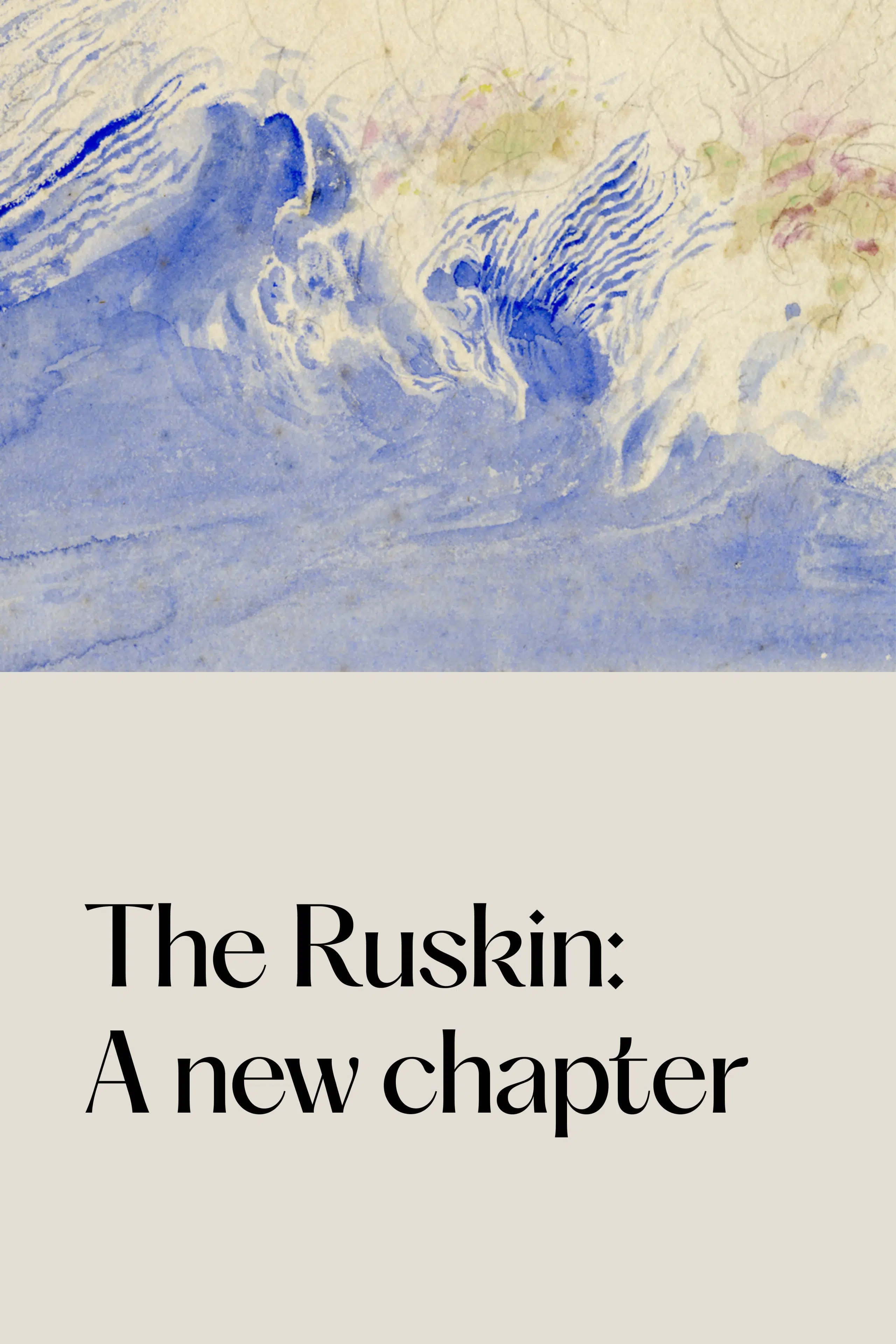
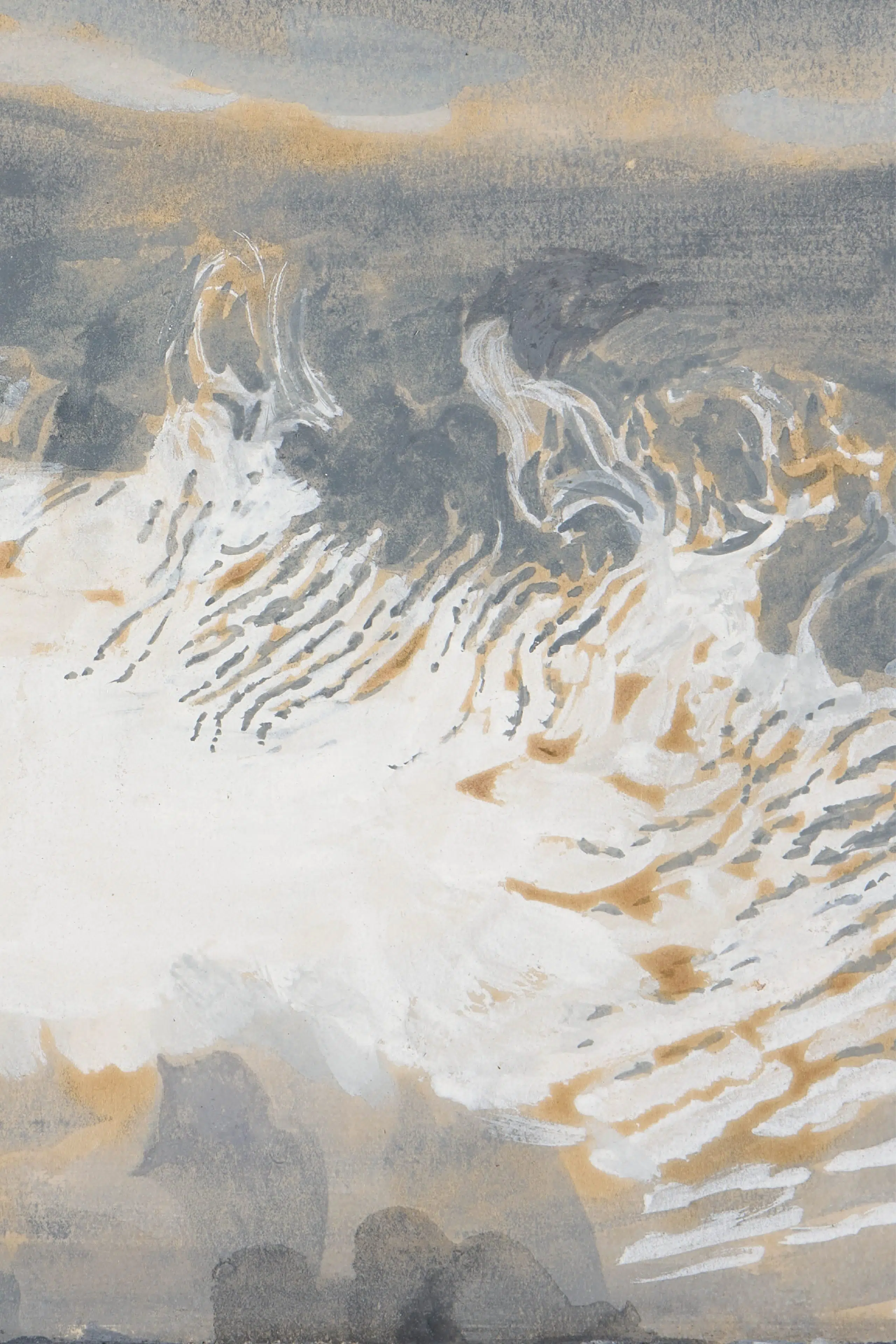
Our starting point was Ruskin’s distinctive way of seeing the world, moving between art, nature and scientific observation. His fascination with the everyday and the overlooked feels particularly relevant in a world that increasingly moves at speed. ‘Look closely, See clearly, Imagine freely’ became an expression of this idea, an invitation to pause, pay attention and see the familiar from a different perspective. This thinking runs throughout the identity, where extreme crops reveal unexpected details within the collection and encourage new ways of looking.
The sky became a central thread. It reflects Ruskin’s fascination with clouds, mountains, weather and light, while offering a universal theme that can connect audiences of different ages and backgrounds. Colours drawn from the collection move between deep blues, warm yellows and earthy tones, evoking shifting skies and the golden hour.
Typography takes cues from the rich letterforms found across objects studied and collected by Ruskin. These historical references are brought into a contemporary visual language.
We approached the identity holistically, considering how it would live across every point of contact. It needed to work during this period without a permanent home, but also once the museum reopens. We developed a flexible toolkit spanning presentations, stationery and business cards, social media and digital communications. Alongside this, we designed a new website that could be developed and expanded in stages by The Ruskin’s in-house team.
The result is an identity designed to evolve with the institution. It connects research with public engagement, the physical with the digital, and Ruskin’s historic collection with the questions his work continues to raise today.